372
public hospitals
Their staff work from our performance dashboard, running on the National Insurer's own domain.

Politeum is the policy intelligence lab that turns government data and research into public-facing decision making tools in days.
372
public hospitals
Their staff work from our performance dashboard, running on the National Insurer's own domain.
42
county insurance houses
Contract discussions grounded in the same screen, on both sides of the table.
Live
in the room
Our local government reform simulator runs live in policy convenings with ministers and mayors.
8 yrs
in Parliament
Founded by a Budget Committee Vice Chair with a PhD in Finance.
Every government produces two disconnected things: analysis that only experts can read (spreadsheets, PDFs, briefings) and communication that citizens don't trust because it's detached from the evidence.
We merge the two. The same interactive tool a ministry uses to test a scenario is published for the public to inspect the reasoning.
One artifact: the policy asset is the narrative asset.
Interactive apps where officials test reform options against real data and see the consequences recompute live. Tools that enable the public to investigate claims, explore scenarios and express preferences about complex subjects.
Proof: Local Government Reform — every merger scenario testable in seconds.
Case study → 02Operational transparency tools that institutions run continuously, on their own infrastructure. E.g. Citizens can check hospital occupancy rates. Hospital managers can benchmark against peers.
Proof: Public Hospital Performance — every public hospital's clinical and financial performance, live.
Case study → 03Research that cost millions to produce, transformed from hundreds of PDF pages into explorable apps. Life-changing policy made clear to citizens and the press.
Proof: the Draghi Report Tracker and Demography of Europe.
Case study →Working tool in front of you fast; we iterate from evidence, not specification documents.
Official data sources, neutrality, accessibility, EU data practices. We've sat on the institutional side of the table; we build for its constraints.
You know what the artifact costs before we start.
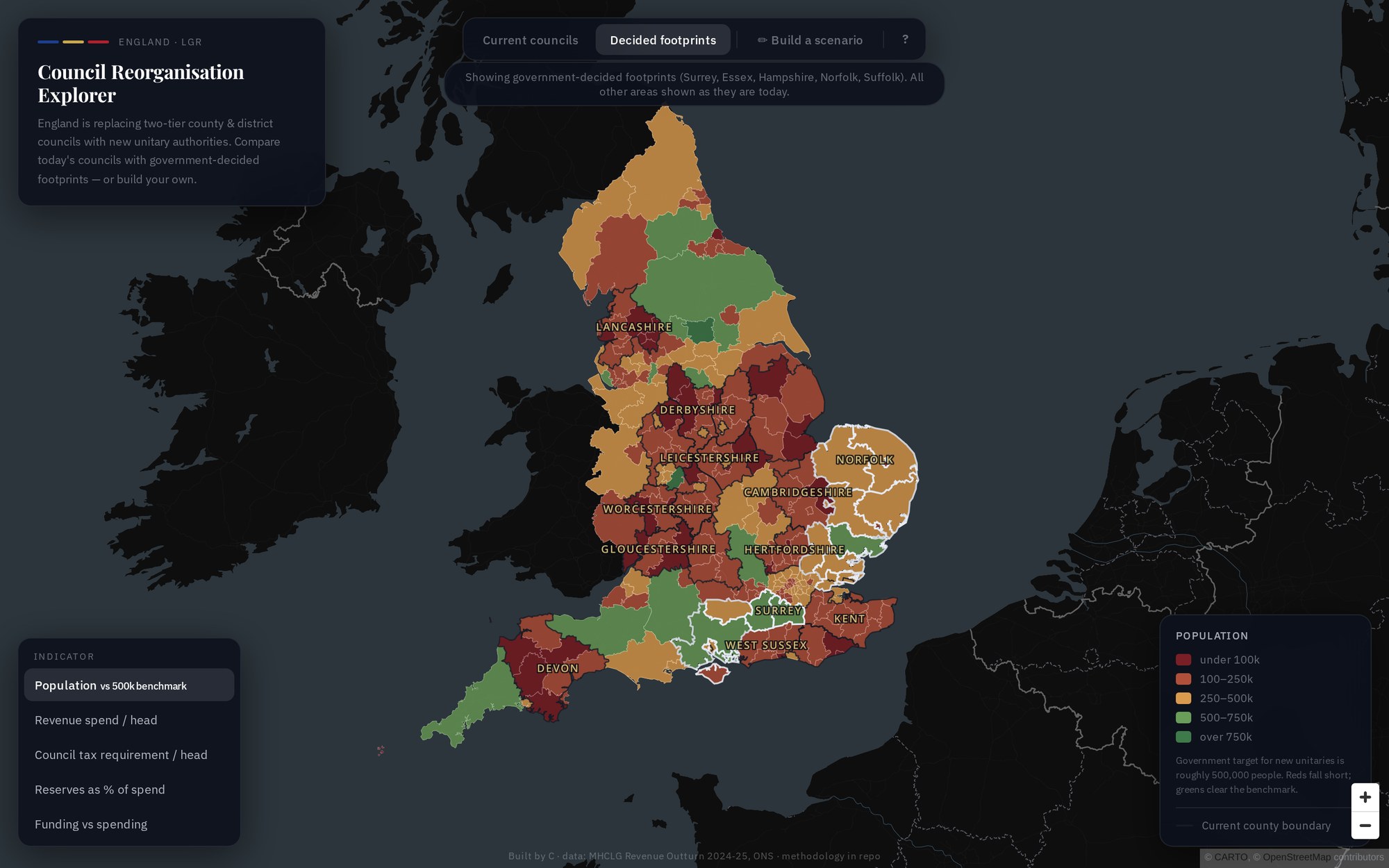
Every English authority tested against the 500k benchmark.
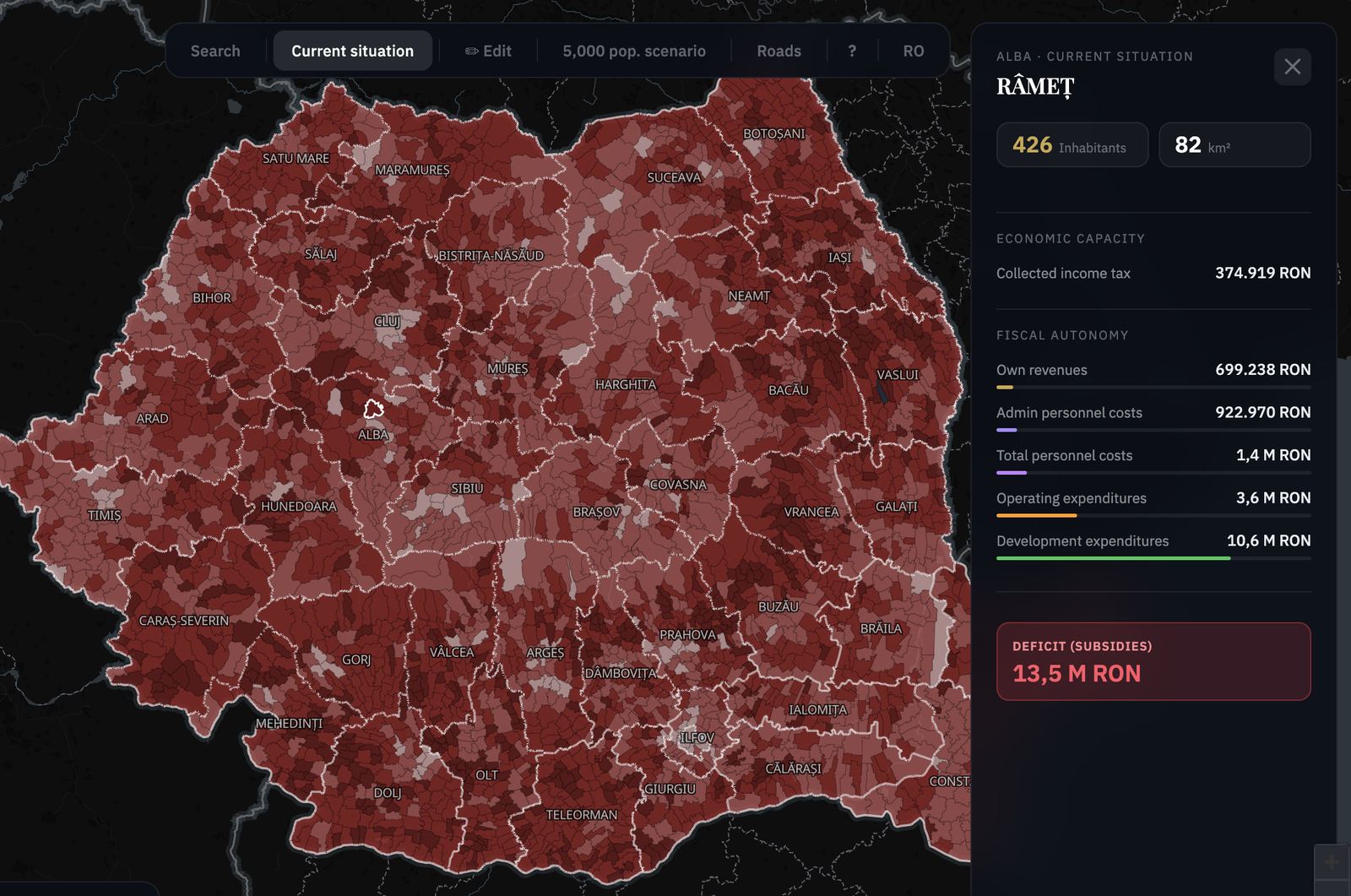
Romanian commune mergers tested live, county by county.
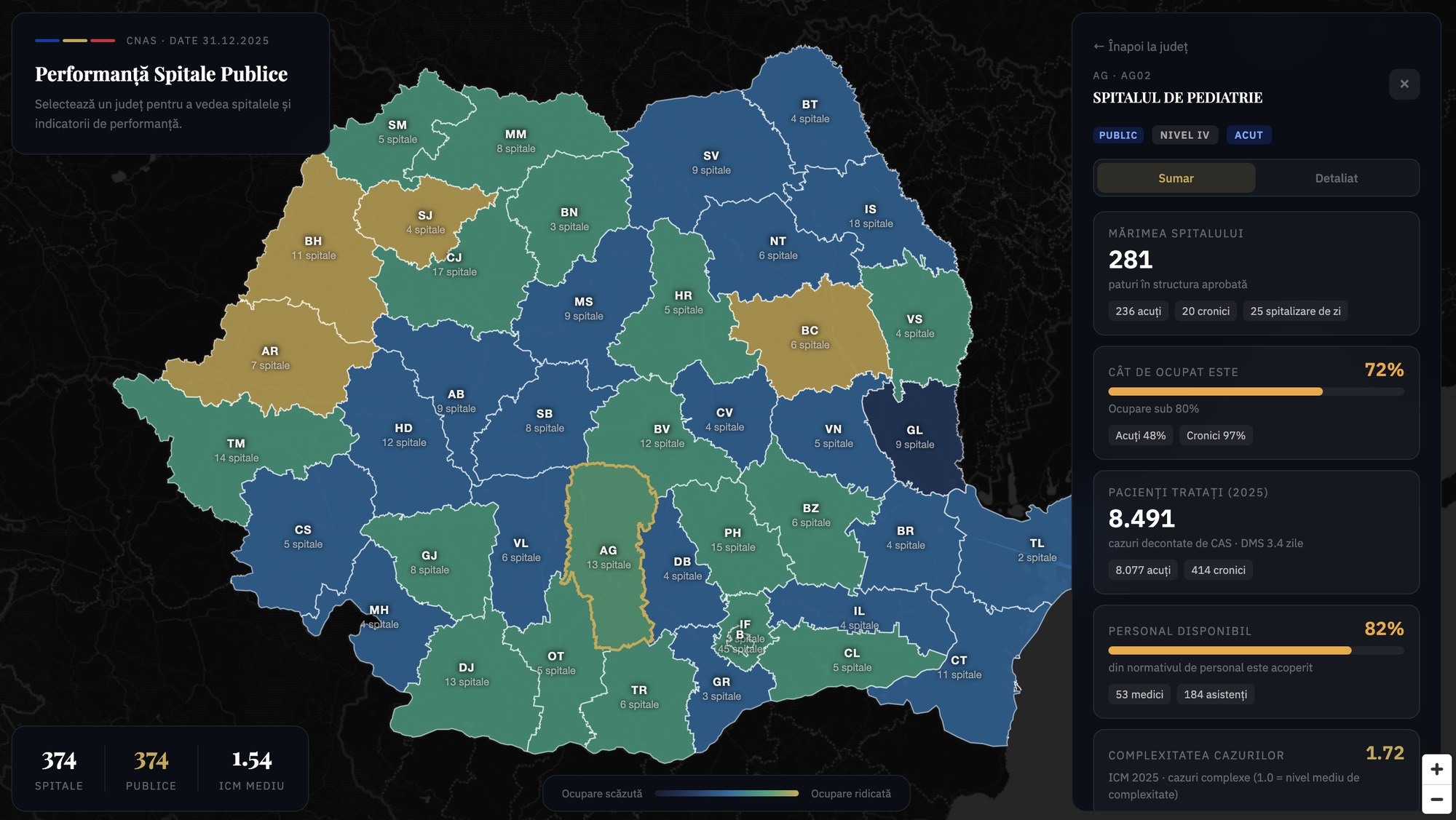
Running on cnas.ro for 372 hospitals.
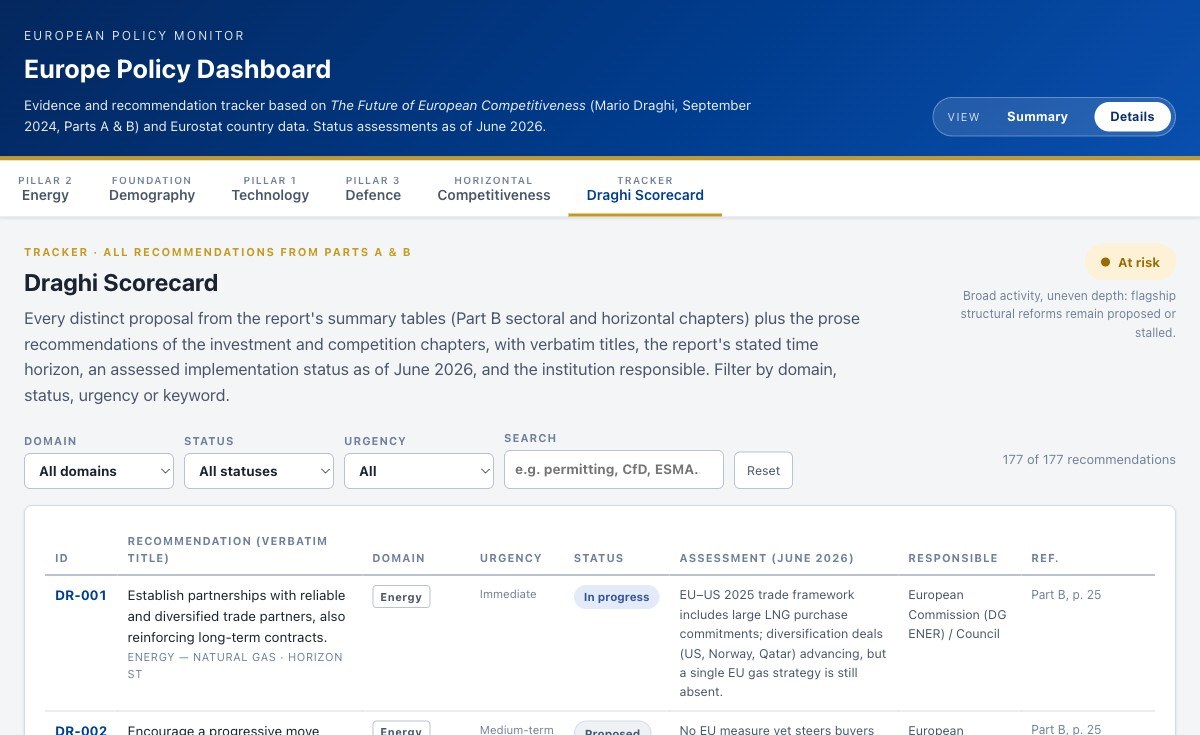
18 proposals, 177 indicators, tracked live.
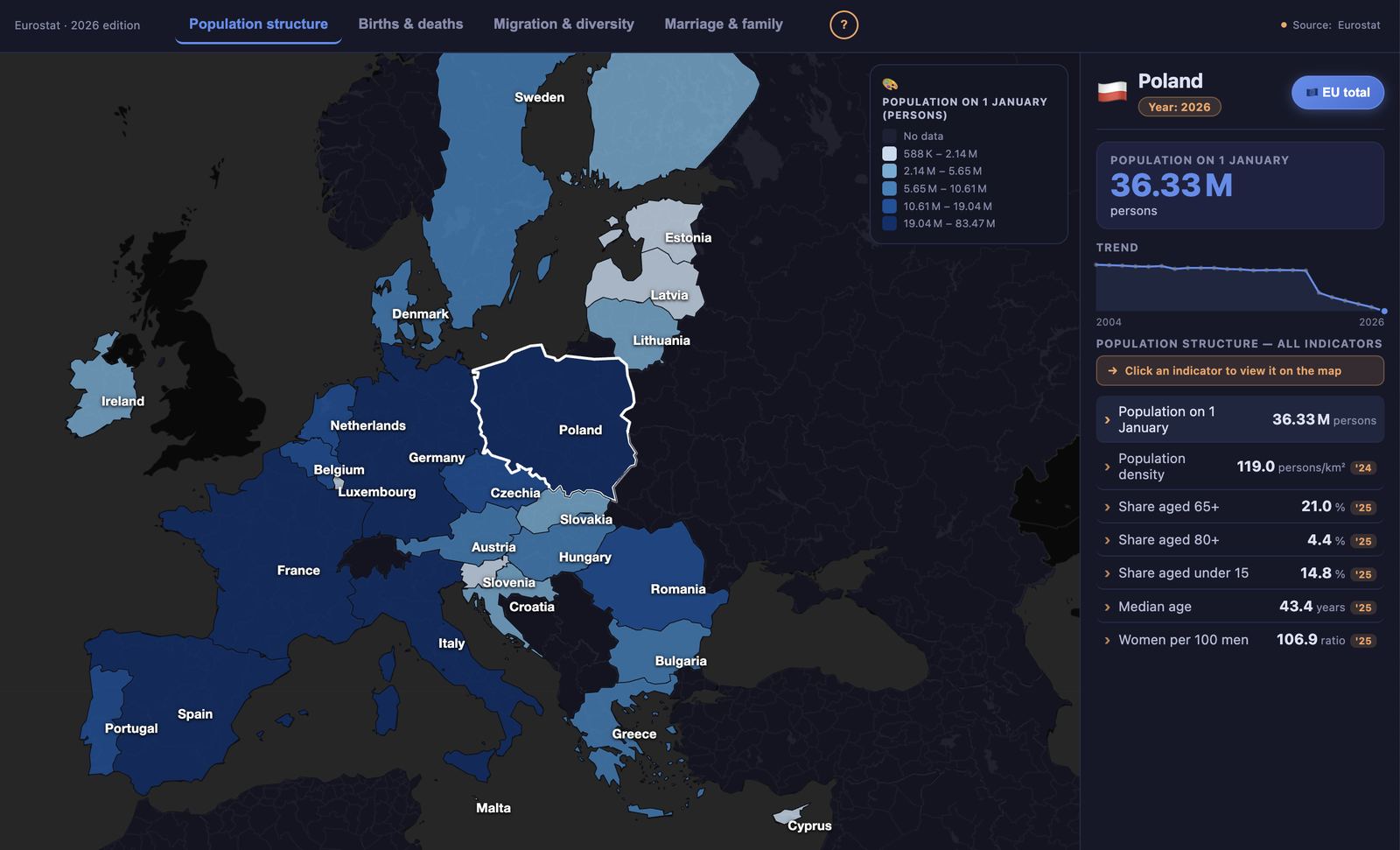
Eurostat's own data, one explorable map.
We started Politeum because democracy is getting harder to practice. Government policy is complicated, and complex reforms are genuinely difficult to explain. In that gap of uncertainty, propaganda and disinformation flourish. When people can't see how a reform would actually benefit them, someone is always ready to tell them a frightening story instead.
The usual answer is "transparency." But transparency, too often, means publishing a giant spreadsheet on a government website. Nothing is hidden yet nothing is understandable to a normal person either. We want the harder thing.
Make government understandable, not just transparent.
That ambition is in our name. Politeum comes from the Greek politeia — a word that meant, at once, how power is organized and how citizens belong to it. It never separated the machinery of government from the people living under it, and neither do we. Every tool we build sits at the intersection of three things: citizens, government, and policy.
It rests on an old idea of citizenship. A free citizen is expected to take part in civic life, not merely to obey; citizenship carries both rights and responsibilities; and government, in turn, has obligations to the people it serves. Tools that let citizens genuinely understand the decisions made in their name are how those obligations get met and how a democracy defends itself against those who profit from confusion.

Politeum was founded by Cosette Chichirau — PhD in Finance, veteran quant (State Street, MassMutual), and for eight years a Member of the Romanian Parliament, serving as Vice Chair of the Budget Committee.
We bring that combination to the lab: the quantitative rigor to model a health system or a fiscal reform correctly, and the political experience to know what a minister can defend, what a journalist will ask, and what a citizen will believe. Every Politeum tool is built with all those audiences in mind.
A correct policy that no one understands changes nothing.
Talk to us. You'll leave with a concrete idea of what your artifact could be.